Battery Management Systems (BMS) are essential for the safe, efficient, and reliable operation of lithium-ion batteries, especially in high voltage scenarios. These electronic systems oversee battery packs by monitoring key cell parameters, estimating operational states, and ensuring the battery operates within its Safe Operating Area (SOA). BMS are critical for all lithium-ion battery packs, which are divided into Low Voltage (LV) and High Voltage (HV) categories. In automotive contexts, high voltage is defined as 30–1000 VAC or 60–1500 VDC, while low voltage is below 30 VAC or 60 VDC. Standards like LV 112-1 further categorize voltages into low voltage (≤30 VAC, ≤60 VDC), high voltage class 2 (≤600 VAC, ≤900 VDC), and high voltage class 3 (≤1000 VAC, ≤1500 VDC). Low voltage packs are typically used in light electric vehicles, hybrids, and two- or three-wheelers, whereas high voltage packs power traction systems in electric vehicles and stationary Energy Storage Systems (ESS). High voltage packs consist of numerous lithium-ion cells arranged in series and parallel to achieve the required voltage and capacity. For example, a 400V, 20kWh battery pack for a hybrid bus using 3.2V 50Ah LiFePO4 cells would need about 125 cells in a 125S1P configuration.
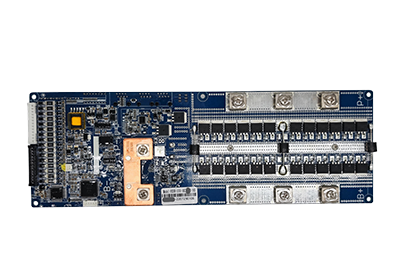
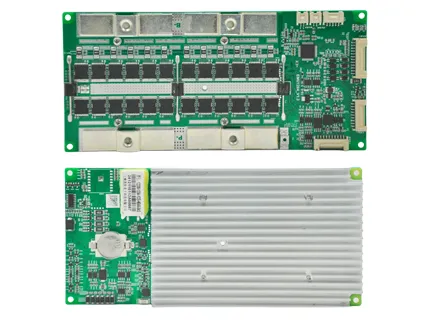
A centralized BMS, such as a 48 volt BMS system, employs a single controller to manage all monitoring, balancing, and control tasks for the battery cells. Housed in one unit, it connects to the cells through a wire harness that facilitates voltage and temperature measurements and cell balancing. Powered directly by the battery, it eliminates the need for an external power source. The system features multiple Analog-to-Digital Converter (ADC) channels to monitor cell voltages, with voltages at the topmost cells increasing relative to the BMS ground as the cell count grows. The centralized BMS also includes intelligent circuitry for internal communication, data acquisition, calculating State of Charge (SoC) and State of Health (SoH), controlling the Power Distribution Unit (PDU), and managing external communication.
Unlike centralized systems, decentralized BMS distribute monitoring and control functions across multiple units. This can be implemented through various configurations:
· Modular Topology: The BMS is split into identical modules, each connected to a subset of cells via its own wiring. One module acts as the master, overseeing the entire pack and communicating with the system, while others serve as remote units, relaying data to the master.
· Master-Slave Topology: Slave units monitor and manage groups of cells within a battery module, communicating with a master unit that handles state estimation, PDU control, and external communication without directly measuring voltages.
· Distributed Topology: Electronics are integrated into cell boards placed directly on the cells, reducing wiring to a few communication lines connecting to a central controller responsible for computation and communication.
High voltage battery BMS, with their large cell counts, require extensive wiring, which complicates assembly, maintenance, and reliability. Decentralized BMS address these issues by positioning monitoring circuitry closer to the cells, reducing wire length. This enhances measurement accuracy by minimizing electromagnetic interference and improves reliability by reducing the risk of disconnections from shocks or vibrations. Additionally, decentralized systems are flexible, allowing easy scalability by adding or removing monitoring units, unlike centralized systems with fixed inputs.
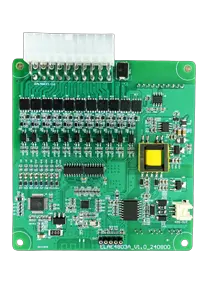
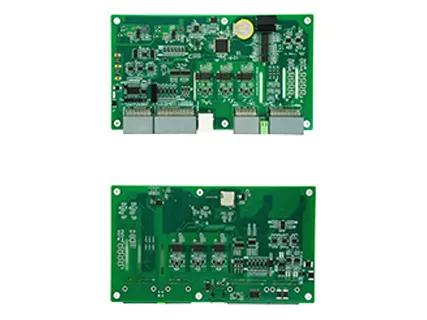
The OSM high voltage battery management system is a decentralized system designed for high voltage applications, employing a master-slave topology. Battery Monitoring Units (BMUs), acting as slaves, handle cell voltage, temperature measurements, and balancing. The Slave Monitoring Unit (SMU), the master, collects data and issues commands via isolated SPI channels. The SMU manages cell balancing, state estimation, and PDU control to ensure safe operation within the defined SOA. It also incorporates advanced safety features like interlock checks, an Insulation Monitoring Device (IMD) interface, and weld detection for enhanced reliability.
Battery Management Systems are crucial for the safety and efficiency of lithium-ion batteries, particularly in high voltage applications like electric vehicles and energy storage systems. As lithium-ion technology grows, effective BMS solutions are increasingly vital. Decentralized BMS wholesale architectures excel in high voltage scenarios, offering superior measurement precision, connection reliability, and scalability, making them indispensable for modern energy storage and automotive applications.