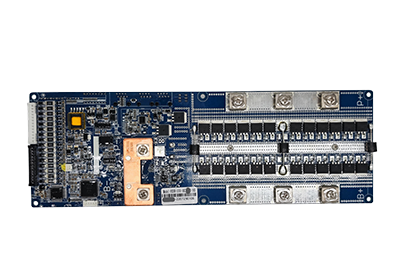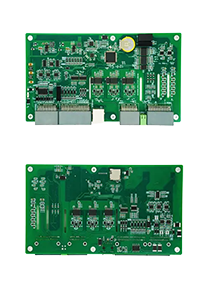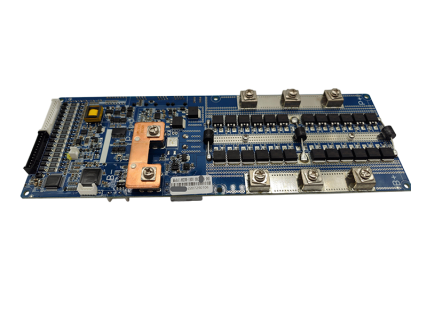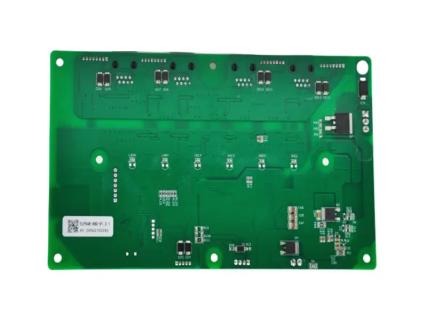
A Battery Management System (BMS) is an advanced technology designed to manage a battery pack, which comprises battery cells organized in a matrix to provide specific voltage and current for various applications. The BMS ensures efficient battery operation by monitoring its condition, safeguarding it from damage, estimating its operational state, optimizing performance, and communicating its status to external devices. While the term “battery” refers to the entire pack, the BMS focuses on managing individual cells or groups of cells, known as modules. Lithium-ion rechargeable cells, widely used in products like laptops and electric vehicles due to their high energy density, require precise oversight. Operating these cells outside their safe operating area (SOA) can reduce performance or lead to hazardous outcomes, making the BMS essential.
Battery Management Systems are customized to meet the specific requirements of a battery pack, with their design and functionality varying based on factors such as cost, complexity, size, application, safety, lifespan, warranty, and regulatory needs. The primary roles of a BMS include protecting the battery pack and managing its capacity. Protection management focuses on maintaining electrical and thermal conditions within the SOA. Electrical protection involves monitoring current and voltage to prevent damage from exceeding safe limits, while thermal protection uses passive or active temperature control to ensure optimal operating conditions. These combined efforts allow the battery to function safely and efficiently across a wide range of conditions. In high-power scenarios such as high voltage battery BMS architectures, detailed management and safety protocols are especially critical.
To ensure electrical safety, the BMS continuously monitors the battery pack's current and the voltage of individual cells or modules, keeping operations within the electrical SOA defined by the cell's current and voltage limits. BMS suppliers set maximum continuous and peak current limits for charging and discharging, which the BMS enforces, often applying derating to prolong battery life. For example, the BMS may permit short bursts of high current, such as during rapid acceleration in an electric vehicle, but will reduce or halt current if excessive peaks, like those caused by a short-circuit, are detected. This approach balances safety with responsiveness to dynamic load demands.
Voltage management is vital for lithium-ion cells, which must operate within specific voltage ranges determined by their chemistry and temperature. The BMS enforces these limits by adjusting charging or discharging processes to prevent over- or under-voltage conditions. For instance, when a cell nears its high-voltage threshold, the BMS may reduce or stop the charging current to avoid damage, incorporating hysteresis to prevent rapid cycling of control actions. Similarly, at low voltages, the BMS may limit load demands, such as reducing torque in an electric vehicle, to prioritize both safety and battery longevity.
Temperature significantly affects lithium-ion battery performance, with capacity decreasing at low temperatures due to slower chemical reactions. Charging below 0°C can cause permanent damage, such as lithium plating on the anode, which reduces capacity and increases failure risks. The BMS manages temperature through tailored heating or cooling mechanisms based on the battery's size, cost, and application. Heating energy may come from an external source or the battery itself, while cooling can involve passive airflow or active systems like ethylene-glycol coolant circulated through a heat exchanger. These systems maintain the battery within an optimal temperature range, ensuring performance and preventing degradation, especially during fast charging or discharging.
Maximizing battery pack capacity is a critical BMS function, addressing cell imbalances caused by differences in self-discharge rates, charge/discharge cycles, temperature, and aging. Without proper management, these imbalances can render the battery pack ineffective. The BMS balances the state-of-charge (SOC) across cells to ensure each reaches its maximum capacity without overcharging. A common method, passive balancing, redistributes charge from higher-SOC cells to lower ones during charging, using transistor switches and resistors to control current flow. This process prevents overcharging of stronger cells while allowing weaker ones to charge fully, maintaining overall pack efficiency and extending its lifespan.
Battery Management Systems vary in complexity and topology, depending on their integration with the battery pack. A centralized BMS uses a single control unit connected directly to all battery cells, offering a compact and cost-effective solution but requiring extensive wiring, which complicates maintenance in large packs. A modular BMS divides oversight into submodules, each managing a portion of the battery, simplifying troubleshooting and enhancing scalability, though it increases costs due to duplicated functionality. The primary/subordinate topology assigns simpler measurement tasks to subordinate units and complex computations to a master unit, balancing cost and efficiency. In contrast, a distributed BMS integrates hardware and software directly onto each cell or module, reducing wiring but increasing costs and maintenance challenges due to its embedded design.
The primary role of a BMS is to ensure functional safety by preventing voltage, current, or temperature from exceeding safe limits during charging and discharging. Exceeding these limits can damage the costly battery pack or cause dangerous conditions like thermal runaway. The BMS also protects against low-voltage states that could lead to copper dendrite growth, increasing self-discharge and safety risks. Beyond safety, the BMS optimizes performance by balancing cell SOC to maximize capacity and prevent degradation. It also manages thermal conditions to maintain an optimal operating range, such as 30–35°C, enhancing battery life and reliability in demanding applications like electric vehicles or aircraft.
Battery Management Systems are essential for the safe and efficient operation of lithium-ion battery energy storage systems (BESS), which range from small laptop batteries to large packs with voltages up to 800V and currents exceeding 300A. By ensuring functional safety, BMSs like 48 volt bms system prevent catastrophic failures, protecting users and equipment. They enhance battery lifespan and reliability by keeping cells within their SOA, mitigating the effects of aggressive usage or thermal stress. Through cell balancing, BMSs optimize performance and range, ensuring maximum capacity utilization. Continuous monitoring and data collection enable diagnostics, SOC estimation, and communication with external systems, providing valuable insights into battery health and remaining capacity.