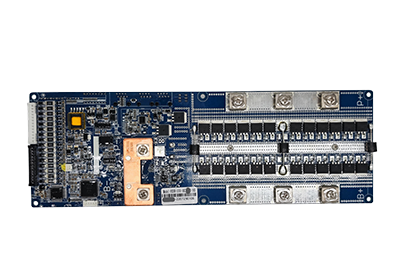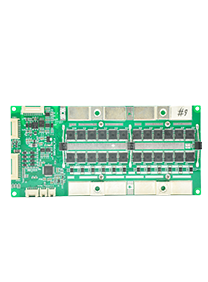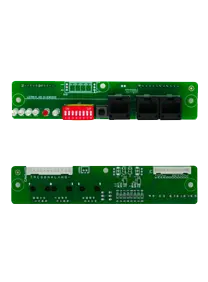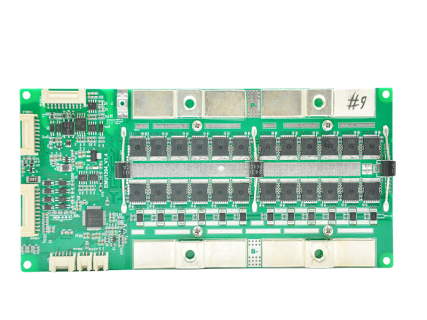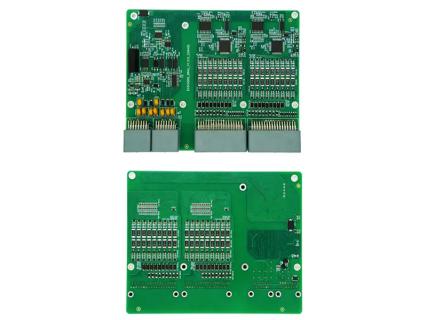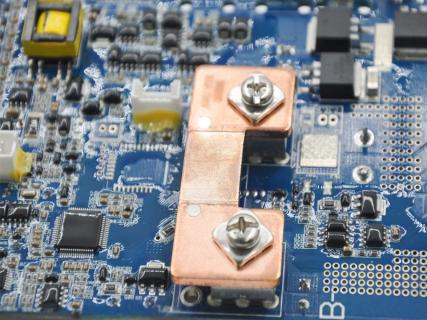
Choosing the right BMS for 48V battery packs requires more than matching voltage ratings. Industrial applications need a battery management system that can handle the required current, operating environment, communication protocols, safety requirements, and long-term reliability. A suitable 48V BMS should provide accurate cell monitoring, effective protection, intelligent balancing, and seamless integration with the complete battery system.
For industrial battery packs, the ideal 48 volt battery management system is selected based on battery chemistry, pack capacity, discharge requirements, application conditions, and system control needs. A properly configured 48V battery management system improves battery safety, extends service life, and ensures stable operation in demanding environments.
A 48V battery management system is the control center of a 48V lithium battery pack. It continuously monitors individual cell voltage, pack current, temperature, and charging/discharging conditions to protect the battery and optimize performance.
In industrial battery applications, a 48V BMS typically provides:
Overcharge protection to prevent cell damage during charging
Over-discharge protection to avoid irreversible capacity loss
Overcurrent protection during high-load operation
Short-circuit protection for system safety
Temperature monitoring and protection
Cell balancing to maintain consistent cell performance
Communication functions for system monitoring and control
For applications such as AGVs, energy storage systems, telecom backup power, industrial equipment, and electric vehicles, the BMS plays a critical role in maintaining battery reliability.
Selecting a bms for 48v battery applications starts with understanding the electrical and operational requirements of the battery pack. The following factors should be evaluated before choosing a BMS model.
A 48V lithium battery pack is commonly built with lithium iron phosphate (LiFePO4) cells or other lithium chemistries.
For example:
LiFePO4 cells have a nominal voltage of approximately 3.2V
A typical 48V LiFePO4 pack uses 15 or 16 cells in series (15S/16S configuration)
The BMS must match the exact series cell count
Using an incorrect series configuration may cause inaccurate voltage detection, improper charging control, and potential safety risks.
When selecting a 48V BMS, always confirm:
Battery chemistry
Number of cells in series
Maximum charging voltage
Maximum discharge voltage
The current rating is one of the most important specifications when choosing a 48 volt battery management system.
The BMS continuous discharge current should be higher than the maximum load current of the application. The peak current capability should also support temporary high-power demands.
For example:
A 48V battery powering a small industrial controller may require a 50A BMS
A high-power motor system may require a 100A, 150A, or higher current BMS
When selecting current capacity, consider:
Continuous operating current
Peak startup current
Motor acceleration current
Environmental temperature
Required safety margin
Choosing a BMS with insufficient current capacity can lead to frequent protection shutdowns and reduced system performance.
Industrial battery packs require more advanced functions compared with consumer batteries. A reliable 48V battery management system should include:
Accurate voltage measurement helps identify abnormal cells early and prevents battery imbalance.
Cell imbalance reduces usable battery capacity. A quality BMS maintains consistent cell voltage through balancing technology.
Passive balancing is cost-effective for standard applications
Active balancing improves efficiency for large-capacity industrial batteries
Industrial systems often require real-time battery information. Common communication options include:
CAN bus
RS485
UART
Bluetooth monitoring
CAN communication is widely used in industrial equipment because it enables integration with controllers, chargers, and energy management systems.
A professional 48V BMS should monitor:
Cell overvoltage
Cell undervoltage
Overcurrent
Short circuit
High temperature
Low temperature
Charging abnormalities
These protections improve system safety and reduce maintenance costs.
The best communication protocol depends on the application system.
CAN communication is commonly preferred for industrial battery packs because it provides reliable data transmission and supports communication between the BMS, inverter, charger, and controller.
RS485 is often used in energy storage and monitoring systems because of its long-distance communication capability.
Bluetooth communication is suitable for maintenance teams that need quick access to battery data through mobile devices.
For industrial projects, selecting a 48V BMS with customizable communication options provides better system compatibility.
Thermal management is essential for industrial battery reliability. Lithium batteries operate within specific temperature ranges, and excessive heat or cold can reduce performance and shorten lifespan.
A suitable 48 volt battery management system should support:
Multiple temperature sensors
High-temperature cutoff
Low-temperature charging protection
Temperature-based charging and discharging control
For high-power applications, temperature monitoring should be considered a necessary feature rather than an optional function.
Standard BMS products are suitable for common battery configurations, while customized solutions are often required for industrial projects with specific requirements.
A customized bms for 48v battery may be necessary when the application requires:
Special communication protocols
Higher discharge current
Unique mechanical design
Specific protection parameters
Integration with existing control systems
Industrial battery manufacturers often work with BMS suppliers to optimize firmware settings, hardware design, and communication compatibility.
A 48V BMS is widely used in:
Industrial AGVs and AMRs
Solar energy storage systems
Telecom backup batteries
Electric forklifts
Golf carts and low-speed vehicles
UPS systems
Robotics equipment
Industrial automation systems
Each application has different requirements for current, communication, and protection functions.
Before purchasing a BMS, evaluate the supplier’s technical capabilities and product quality.
Important factors include:
Experience in lithium battery management technology
Hardware reliability testing
Protection algorithm development
Communication customization capability
Production quality control
After-sales technical support
For industrial battery projects, the BMS supplier should be able to provide technical guidance from battery design to final system integration.
Choosing the right 48V battery management system requires careful evaluation of voltage configuration, current requirements, protection functions, communication capability, thermal management, and application environment.
A high-quality 48V BMS is not only a safety device but also an intelligent controller that improves battery efficiency, extends service life, and ensures stable operation of industrial equipment.
For industrial battery packs, selecting a professional BMS supplier with customization capability can significantly improve system reliability and reduce long-term operating costs.
A 48V BMS monitors and protects the battery pack while managing charging, discharging, and cell balancing.
It depends on battery chemistry. A LiFePO4 48V battery usually uses 15S or 16S cell configurations.
The BMS current rating should be higher than the battery’s maximum continuous and peak operating current.
Yes. Many industrial 48V battery management systems support CAN, RS485, and other communication protocols.
A BMS prevents overcharge, over-discharge, overheating, and other conditions that can damage lithium batteries.
Yes. Industrial applications often require customized current ratings, communication functions, and protection parameters.