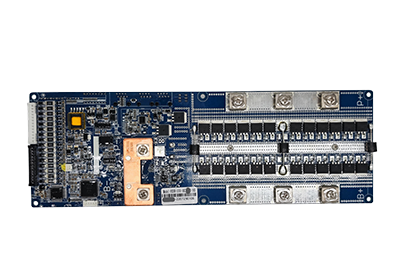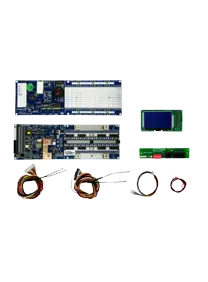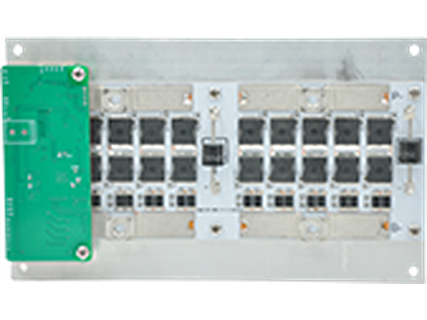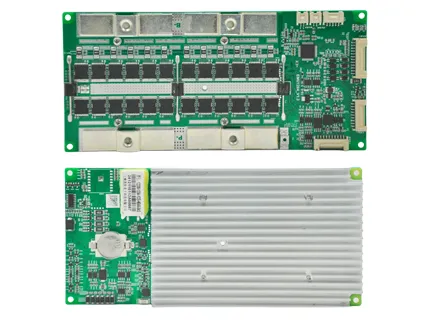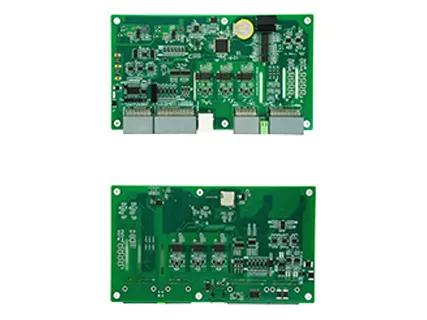
For a typical 12V lead-acid replacement using LiFePO4 cells, the battery normally needs a 4S LiFePO4 BMS because four 3.2V cells in series produce a 12.8V nominal pack.
The BMS should not be selected by voltage alone. A reliable BMS 12V LiFePO4 solution must also match the battery's continuous discharge current, inverter or motor surge current, charging current, temperature range, cell specifications, and whether the finished battery will operate independently or in series/parallel with other packs.
For most retrofit projects, confirm these parameters first:
4S LiFePO4 cell configuration
Continuous and peak discharge current
Maximum charging current
Low-temperature charging protection
Cell balancing
Short-circuit and overcurrent protection
Series/parallel capability if required
CAN, RS485, display, or other smart functions if required
Yes, in many deep-cycle, backup power, RV, marine, solar, and small energy-storage applications. However, the replacement should be treated as a system conversion, not simply a battery swap.
A 12V lead-acid battery and a 12.8V LiFePO4 battery can operate in similar system-voltage ranges, but their charging behavior, low-voltage characteristics, current capability, and protection requirements are different.
Before converting, check:
Charger compatibility: The existing charger must have a suitable LiFePO4 charging profile or adjustable parameters.
Load compatibility: Inverters and DC loads must operate correctly across the LiFePO4 battery's voltage range.
Alternator charging: Vehicle and marine applications may require a suitable DC-DC charging strategy.
Battery protection: Unlike a conventional lead-acid battery, a LiFePO4 retrofit pack should use a dedicated BMS to monitor individual cells and disconnect the battery under abnormal conditions.
Lead-acid equalization should not be applied to lithium batteries. Victron, for example, specifically advises against equalization charging for lithium batteries and uses different charging settings for LiFePO4.
A standard 12V LiFePO4 retrofit normally uses:
4 cells in series × 3.2V = 12.8V nominal
Therefore, the BMS should be a 4S BMS configured for LiFePO4 chemistry.
This is an important distinction. Buyers searching for a 12V lead acid battery BMS are usually looking for the lithium BMS required when a traditional lead-acid battery is converted to LiFePO4. The BMS is managing the new lithium pack, not the original lead-acid chemistry.
ENJIE's 12V lead-acid-to-lithium BMS range is designed around 4S battery configurations and currently includes 100A, 150A, and 200A smart and standard options.
Choose BMS current according to the maximum real load, not simply the battery's Ah capacity.
A 12V 100Ah LiFePO4 battery does not automatically require a 100A BMS.
For inverter applications, a useful estimate is:
DC Current ≈ Load Power ÷ Battery Voltage ÷ Inverter Efficiency
Assuming approximately 12.8V and 90% efficiency:
| Load | Approximate Battery Current | BMS Consideration |
|---|---|---|
| 500W | ~43A | 60A+ depending on surge |
| 1,000W | ~87A | 100A may be near the limit |
| 1,500W | ~130A | 150A or higher |
| 2,000W | ~174A | 200A-class design |
These values are only starting points. The final 12 volt BMS rating also needs to account for:
Inverter startup surge
Motor or compressor inrush current
Cell continuous-discharge rating
Cable and connector capacity
Busbar design
MOSFET thermal performance
Ambient temperature
Battery enclosure ventilation
A 200A BMS does not make 100A-rated cells capable of safely delivering 200A.
It can be, but only when the actual application remains within the BMS and cell current limits.
For example, a 12V 100Ah battery supplying a 30A DC load can operate comfortably with a properly designed 100A BMS. The same battery connected to a 1,500W inverter may draw around 130A at high load and would require a different design.
Peak current also matters. If a pump or inverter briefly draws 180A during startup, the BMS must tolerate the legitimate surge without nuisance tripping while still providing effective overcurrent and short-circuit protection.
For OEM projects, ask for both:
Continuous current rating and peak-current/time capability.
The number printed on the BMS is not enough to evaluate real-world performance.
Do not assume that you can.
Some existing chargers may be usable if their voltage profile can be configured correctly, but lead-acid charging functions such as equalization, reconditioning, desulfation, and inappropriate temperature compensation can be unsuitable for LiFePO4.
Victron's LiFePO4 recommendations, for example, disable equalization and temperature compensation and use lithium-specific absorption and float settings.
Before keeping an existing charger, verify:
Maximum charge voltage
Charge current
Absorption settings
Float behavior
Equalization/desulfation function
Temperature compensation
Behavior after the BMS disconnects charging
A BMS should be the battery's protection layer, not the normal method used to terminate every charge cycle.
A well-designed BMS 12V LiFePO4 battery should provide more than basic overcharge protection.
Pack voltage alone cannot identify a weak or imbalanced cell. The BMS should monitor all four cell groups independently.
Charging and discharging usually require different current thresholds and protection-delay strategies.
This is particularly important in high-current 12V systems because low system voltage often means relatively high operating current.
The BMS should monitor battery and power-stage temperature and restrict operation outside the cell manufacturer's limits.
Low-temperature charge protection is particularly important for LiFePO4 applications. Some retrofit designs also incorporate battery heating where operation in cold environments is expected.
LiFePO4 cells do not automatically correct cell-to-cell imbalance in the same way lead-acid cells can during suitable charging conditions. Cell monitoring and balancing are therefore important parts of lithium battery management.
ENJIE's 12V conversion BMS platform includes cell voltage monitoring, pack-voltage monitoring, charge/discharge current detection, temperature monitoring, short-circuit protection, SOC/SOH functions, and voltage balancing.
It depends on the finished battery product.
A standard BMS is often sufficient for a simple drop-in battery where the primary requirements are protection, balancing, and cost control.
A smart BMS is more suitable when the battery requires:
CAN or RS485 communication
Inverter integration
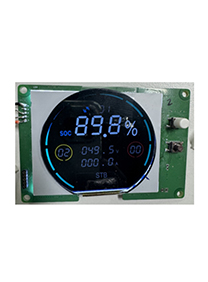
SOC monitoring
LCD display
Parallel battery communication
Automatic addressing
Parameter configuration
System diagnostics
ENJIE currently offers both approaches. The EMU1202 is positioned for applications that do not require external communication, while the EMU1204 smart BMS provides CAN/RS485 communication and additional system-integration functions.
For battery manufacturers, choosing between smart and standard models according to the end application can avoid paying for unnecessary features while preserving an upgrade path for higher-end product lines.
Only when the battery and BMS are specifically designed to support it.
Do not assume that four independent 12V lithium batteries can be connected into a 48V bank simply because four lead-acid batteries previously operated that way.
Series and parallel applications require consideration of:
Pack voltage differences
SOC differences
Current sharing
Connection surge current
BMS recovery behavior
Communication between packs
Maximum supported number of batteries
For example, ENJIE's EMU1204 is designed for 4S applications and supports series battery applications as well as automatic addressing for parallel configurations.
If series or parallel expansion is part of the product specification, this requirement should be defined before the BMS is selected.
Before approving a retrofit battery design, confirm:
Cell chemistry: LiFePO4
Cell configuration: typically 4S
Battery capacity: for example 50Ah, 100Ah, or 200Ah
Continuous discharge current
Peak discharge current and duration
Maximum charging current
Cell manufacturer current limits
High/low-temperature requirements
Heating requirement
Balancing method
Series or parallel configuration
CAN/RS485 or display requirements
Existing charger compatibility
Inverter or DC-load compatibility
For an OEM project, these specifications are much more useful to a BMS supplier than simply requesting "a 100A 12V BMS."
ENJIE's current 12V product platform is designed specifically for lead-acid-to-lithium conversion and small ESS applications, with 4S configurations and 100A, 150A, and 200A options. Smart and standard versions are available for different product positioning.
For a straightforward cost-sensitive replacement battery, a standard BMS may be sufficient. For an intelligent lithium retrofit requiring inverter communication, monitoring, series/parallel management, or system integration, a smart BMS provides greater flexibility.
When requesting a solution, provide the cell model, Ah capacity, continuous/peak current, charger specification, application, series/parallel requirement, and communication interface. This allows the BMS to be selected around the actual battery rather than around voltage alone.
A 12V lead-acid-to-LiFePO4 conversion normally requires a 4S LiFePO4 BMS, but cell count is only the first selection criterion.
The correct 12 volt BMS must match the battery's continuous and surge current, charger, temperature range, cell limits, balancing requirements, and system architecture. The original lead-acid charger and wiring should also be reviewed rather than automatically reused.
For battery manufacturers and OEM retrofit projects, selecting the BMS together with the cells, charger, inverter, and series/parallel configuration is the most reliable way to develop a drop-in lithium battery that behaves predictably in the original 12V system.
Yes. A multi-cell LiFePO4 pack should use an appropriate BMS for individual cell monitoring, overvoltage/undervoltage protection, overcurrent and short-circuit protection, temperature management, and cell balancing.
Yes. Four nominal 3.2V LiFePO4 cells connected in series produce a 12.8V battery, which is commonly marketed as a 12V lithium replacement battery.
Often yes, but check physical dimensions, charger settings, maximum load current, inverter low-voltage settings, wiring, terminals, and temperature requirements before making the replacement.
Yes only if the cells and the complete battery current path are designed for the required current. Installing a 200A BMS does not increase the current capability of cells, cables, busbars, connectors, or terminals.
This is the first one.