Battery equalization may take several minutes, several hours, or considerably longer. There is no universal balancing time because the result depends on how much charge must be transferred or removed, the available balancing current, battery capacity, cell chemistry, operating state, temperature, and the condition of the individual cells.
A small voltage difference in a new, well-matched battery pack may be corrected relatively quickly. A large-capacity pack with aged or inconsistent cells may require repeated balancing cycles and may never remain balanced if one cell has experienced significant capacity loss, high internal resistance, or abnormal self-discharge.
For this reason, battery manufacturers and system integrators should not estimate equalization time from voltage difference alone. A more useful evaluation combines cell voltage, state of charge, capacity difference, balancing current, balancing efficiency, operating conditions, and historical battery data.
Battery equalization time is the period required for a battery balancing system to reduce differences among the cells in a series-connected battery pack to an acceptable range.
The acceptable range is not necessarily zero voltage difference. In practical battery systems, cells may show small voltage variations because of differences in temperature, measurement accuracy, internal resistance, resting time, and electrochemical behavior.
The balancing process may end when:
The highest-to-lowest cell voltage difference falls below a configured threshold;
The calculated SOC difference reaches an acceptable range;
The higher-voltage cells no longer exceed the balancing trigger;
The charger stops operating;
The BMS enters standby or sleep mode;
A temperature or current limit interrupts balancing;
The maximum permitted balancing period is reached.
The meaning of equalization time also depends on the balancing method.
Passive balancing removes energy from cells with a higher voltage by sending a small current through resistors. The excess energy is converted mainly into heat.
Because passive balancing current is usually limited to control heat generation, the process may take a long time when:
Battery capacity is large;
Cell imbalance is significant;
Balancing is active only near the end of charging;
Charging time is short;
The pack rarely reaches the balancing voltage threshold.
A passive BMS may balance cells over multiple charging cycles rather than completing the process in one session.
Active balancing transfers energy from higher-charge cells to lower-charge cells using capacitors, inductors, transformers, or DC-DC conversion circuits.
The available balancing current is often higher than that of passive balancing, so active equalization can reduce a comparable charge difference more quickly. It may also operate during charging, discharging, or standby when supported by the selected board and control strategy.
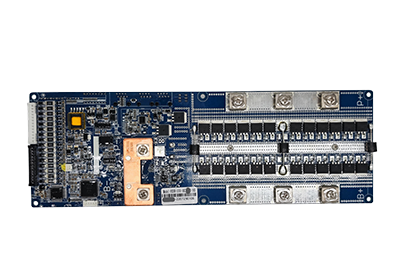
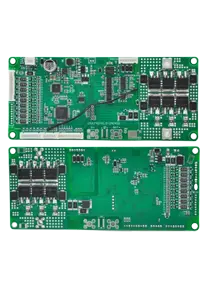
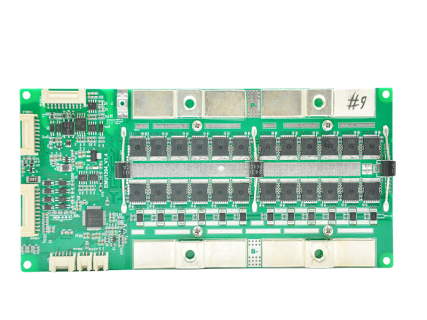
ENJIE’s active equalization category states that its system can record performance data and track cumulative equalization time. Its ELAE4803A standalone board is specified for a 16S LFP or NCM battery pack, provides 3A active balancing, and can operate during charging, discharging, and standby.
However, a higher balancing current does not guarantee that the cells will become identical. Equalization time still depends on cell condition, control thresholds, energy-transfer efficiency, wiring, temperature, and the available operating window.
Battery equalization time is mainly determined by the amount of charge imbalance and the effective balancing rate. The following factors can significantly change the result.
A voltage difference does not represent the same amount of energy in every battery.
For example, correcting a small SOC difference in a 10Ah cell requires less charge transfer than correcting the same SOC difference in a 280Ah energy storage cell.
If two 100Ah cells differ by approximately 2% SOC, the estimated charge difference is around:
100Ah × 2% = 2Ah
An equalizer must remove or transfer approximately 2Ah of charge to correct that difference under simplified conditions. A 3A active equalizer could theoretically transfer that amount in less than one hour, while a 0.1A passive circuit would require much longer.
The real result is usually slower because balancing does not necessarily run continuously at its rated current.
The larger the SOC difference, the more energy must be transferred or removed.
A battery pack with only a minor manufacturing variation may require a short balancing period. A pack containing cells with different capacities, histories, or self-discharge rates may require a much longer period.
Large SOC differences should not automatically be corrected by connecting cells and waiting for the BMS. Severe imbalance may require cell-level inspection, controlled charging, or service procedures before the pack is placed into normal operation.
Battery voltage does not change linearly with SOC.
LiFePO4 cells have a relatively flat voltage curve across much of their usable SOC range. Two cells can have similar voltages while their SOC values are not exactly the same. Near the upper and lower ends of the operating range, however, a small SOC change may cause a more noticeable voltage change.
As a result, estimating equalization time from a voltage difference such as 20mV or 50mV can be misleading unless the following conditions are also known:
Battery chemistry;
Current operating SOC;
Charging or resting state;
Cell temperature;
Time since charging or discharging stopped;
Cell internal resistance.
NMC and other lithium-ion chemistries have different voltage characteristics. Balancing thresholds and time estimates should therefore match the specific chemistry.
Cells with different internal resistance respond differently under load.
A higher-resistance cell may show a larger voltage rise during charging and a larger voltage drop during discharging. The BMS may interpret the resulting voltage difference as imbalance even when the resting SOC difference is smaller.
For a more meaningful assessment, cell voltages should be compared under controlled conditions, such as:
Similar temperature;
Similar current;
Defined rest period;
Stable charger operation;
Verified voltage-sampling accuracy.
If the apparent imbalance disappears after the battery rests, the issue may be related more to resistance and current than to a large charge difference.
A balancing board does not necessarily operate whenever any voltage difference exists.
The control strategy may define:
Minimum cell voltage for balancing;
Minimum voltage difference;
Maximum cell voltage;
Start delay;
Stop threshold;
Temperature range;
Maximum balancing current;
Permitted operating state.
For example, passive balancing may begin only when a cell reaches a specified charging voltage. If the battery operates mainly in the middle of its SOC range, balancing may rarely activate.
An active equalizer may operate in more states, but its control logic may still reduce or stop balancing when voltage differences become small.
The rated balancing current is not always the average current over the complete equalization period.
A system rated at 3A may reduce current or operate intermittently because of:
Small cell-voltage difference;
Thermal limits;
Switching sequence;
Energy-transfer direction;
Protection settings;
Sleep or wake-up logic;
Communication interruptions;
Control-algorithm decisions.
The effective average balancing current may therefore be lower than the maximum published value.
An active equalizer cannot transfer energy with 100% efficiency. Some energy is lost in MOSFETs, inductors, transformers, capacitors, PCB traces, cables, and control circuits.
The actual time will be longer than a simple calculation based only on rated current. Efficiency also changes according to voltage difference, current, circuit topology, and temperature.
Battery temperature affects voltage, internal resistance, charging behavior, and available balancing current.
At low temperature, cell resistance generally increases and lithium charging may be restricted. At high temperature, the equalizer or BMS may reduce current to protect power components.
Equalization should take place within the operating temperature range specified for the cells and balancing equipment.
A battery pack may take progressively longer to balance as cells age.
Possible causes include:
Uneven capacity fade;
Increased internal resistance;
Higher self-discharge;
Different thermal histories;
Repeated overcharge or over-discharge exposure;
Manufacturing variation;
Loose or degraded connections.
Active balancing can reduce charge differences, but it cannot restore lost cell capacity or permanently correct a defective cell.
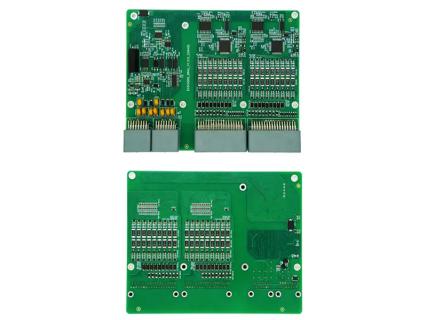
In large series-connected packs managed by a high voltage bms, one weak cell or module may restrict the usable charge and discharge range of the entire battery cluster. ENJIE’s high-voltage architecture uses BMUs to collect real-time cell voltage and temperature data, while the BCU manages cluster status and system-level protection.
Historical data is therefore important. A cell that repeatedly becomes the highest during charging or the lowest during discharging may require inspection rather than progressively longer balancing.
Balancing current is one of the most important factors affecting equalization speed. Under simplified conditions, the time can be estimated using:
Equalization time ≈ charge difference ÷ effective balancing current
Where:
Charge difference is expressed in ampere-hours;
Effective balancing current is expressed in amperes;
The result is expressed in hours.
This calculation is an estimate rather than a guaranteed completion time.
Assume two 100Ah cells have an estimated SOC difference of 2%.
Charge difference = 100Ah × 2%
Charge difference = 2Ah
The following table shows idealized time estimates at different balancing currents:
| Balancing current | Idealized time for 2Ah difference |
|---|---|
| 0.05A | 40 hours |
| 0.10A | 20 hours |
| 0.20A | 10 hours |
| 1A | 2 hours |
| 2A | 1 hour |
| 3A | Approximately 40 minutes |
These values assume that the balancing current remains constant and that the full current directly corrects the required charge difference.
Real balancing generally takes longer because:
Current may decrease as cells approach balance;
The circuit may balance only selected cells at one time;
The board may cycle between channels;
Balancing may stop at temperature limits;
The battery may continue charging or discharging;
Energy transfer is not perfectly efficient;
SOC estimates may contain error.
ENJIE’s active-equalization solution describes passive balancing as a commonly integrated BMS function with relatively low balancing capability, often below 100mA. Its high-voltage EHVS500 BMU is listed with a 200mA passive balancing function during charging and standby.
At 100mA, removing 1Ah of excess charge would require approximately ten hours of continuous balancing under ideal conditions.
If balancing is available for only one hour near the end of each charge, the same correction may require multiple complete charging cycles.
ENJIE states that active balancing solutions may operate from several hundred milliamperes to multiple amperes. Its ELAE4803A external equalization board provides a rated active balancing current of 3A.
A higher current is especially useful for:
Large-capacity energy storage cells;
Packs with significant accumulated imbalance;
Aging battery systems;
Applications with limited balancing time;
Systems that do not remain at full charge for long periods.
However, the balancing current must be suitable for the cell capacity, board design, thermal conditions, wiring, and control algorithm. Faster is not always better if the system cannot accurately monitor temperatures and cell conditions.
A useful estimate requires more information than cell voltage difference. The following process provides a more structured approach.
Record the voltage of every cell under the same operating condition.
The comparison should indicate whether the measurements were taken:
During charging;
During discharging;
At rest;
At a defined current;
At a defined temperature.
Comparing one loaded voltage with another resting voltage will not provide a meaningful result.
Use the battery chemistry’s voltage-SOC relationship, BMS SOC data, charging history, or controlled capacity testing to estimate the difference.
For LiFePO4 cells in the flat middle portion of the voltage curve, voltage alone may not provide an accurate SOC estimate. Top-of-charge data or capacity testing may be more useful.
Use:
Charge difference = cell capacity × estimated SOC difference
For a 280Ah cell with a 1% estimated SOC difference:
280Ah × 1% = 2.8Ah
If the effective average balancing current is 2A:
2.8Ah ÷ 2A = 1.4 hours
This is the idealized energy-transfer period.
The real time should include an allowance for:
Conversion loss;
Reduced current near the stop threshold;
Channel switching;
Thermal derating;
Measurement uncertainty;
Battery operation during balancing;
Balancing duty cycle.
Rather than promising an exact time, the result should be expressed as a range and verified through operating data.
| Cell capacity | Estimated SOC difference | Charge difference | Balancing current | Idealized time |
|---|---|---|---|---|
| 50Ah | 1% | 0.5Ah | 0.1A | 5 hours |
| 50Ah | 1% | 0.5Ah | 1A | 0.5 hour |
| 100Ah | 3% | 3Ah | 0.2A | 15 hours |
| 100Ah | 3% | 3Ah | 3A | 1 hour |
| 280Ah | 2% | 5.6Ah | 0.2A | 28 hours |
| 280Ah | 2% | 5.6Ah | 3A | Approximately 1.9 hours |
These examples are not guaranteed product performance values. They illustrate why large-capacity energy storage cells may need a higher balancing current when meaningful SOC differences must be corrected within a practical period.
Passive balancing often operates near the end of charging.
Suppose a 100Ah battery requires 2Ah to be removed from a higher-SOC cell, but the passive balancing circuit provides 0.1A and remains active for only two hours during each charging session.
The energy removed per session is approximately:
0.1A × 2 hours = 0.2Ah
The pack may require approximately ten comparable sessions to remove 2Ah under simplified conditions.
This explains why users sometimes report that passive balancing appears slow even when the circuit is operating correctly.
An active equalizer that operates during charging, discharging, and standby may have a longer available operating window.
If it can transfer energy for several hours each day, the calendar time required to correct imbalance may be much shorter than for a passive circuit that operates only at the top of charge.
The actual result still depends on the board’s algorithm, thermal conditions, and whether the battery continues to experience uneven loading or self-discharge.
A long equalization period does not always mean the equalizer is faulty. Large battery capacity, low balancing current, and a short operating window can naturally require more time.
However, repeated or continuous imbalance may indicate an underlying battery or wiring problem.
If the same cell consistently becomes the highest-voltage cell during charging, possible causes include:
Lower capacity;
Higher SOC;
Higher internal resistance;
Temperature difference;
Voltage-sampling error;
Loose connection;
Cell aging.
Balancing may temporarily reduce the voltage difference, but the condition may return during the next cycle.
A cell that becomes the lowest during discharge may have reduced usable capacity, higher resistance, or abnormal self-discharge.
Repeated balancing cannot recover capacity that has already been lost.
If the cells appear balanced after charging but one cell drifts rapidly during rest, the cell may have higher self-discharge or a leakage path.
Possible causes include:
Defective cell;
Moisture or contamination;
Damaged sensing circuit;
Connected accessory load;
Equalizer fault;
Incorrect wiring.
The rated current may not be achieved if:
Cell-voltage difference is too small;
The circuit is thermally limited;
The board is operating intermittently;
Wiring resistance is excessive;
Connector contacts are poor;
The power circuit has entered protection;
Parameters are incorrectly configured.
The condition should be confirmed through current data rather than assuming the equalizer always operates at its maximum rating.
Incorrect voltage data can cause unnecessary balancing or prevent balancing from starting.
Sampling problems may result from:
Reversed cell wires;
Loose terminals;
Poor crimps;
Excessive connector resistance;
Broken sensing wire;
Electrical interference;
Incorrect cell sequence;
Damaged acquisition input.
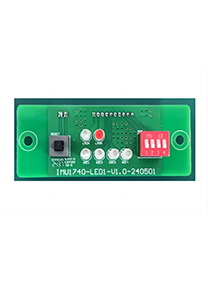
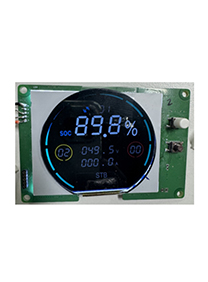
The selection and installation of bms cable types can therefore affect equalization diagnosis. Cell sampling cables must match the BMS connector, cell sequence, conductor specification, length, and PACK layout. ENJIE lists sampling, switch, and LCD cables and supports customization of plugs, cable types, conductor diameters, and lengths.
Wire-break detection is also included in ENJIE’s active equalization category to help identify faults that could affect monitoring and balancing.
Cells at different temperatures may show different voltage and resistance behavior.
An imbalance that appears during operation may partly result from:
Uneven cooling;
Proximity to heat-generating components;
Different airflow;
Enclosure position;
Heating-pad arrangement;
Sensor placement.
Thermal conditions should be checked before concluding that one cell has a permanent SOC difference.
Cells with different brands, capacities, production batches, chemistries, ages, or previous operating histories should not be assumed to balance and age identically.
An equalizer can transfer energy, but it cannot make fundamentally different cells perform as a matched set.
Battery equalization in a lithium battery management system should not be confused with an equalizing charge used for some lead-acid batteries.
A lead-acid equalizing charge may involve applying a controlled elevated charging voltage to address cell imbalance or electrolyte stratification. This procedure is chemistry-specific.
Lithium-ion and LiFePO4 batteries require cell voltage to remain within defined limits. Applying a generic lead-acid equalizing-charge procedure to a lithium battery may create an overvoltage and safety risk.
Lithium battery equalization should instead be managed through:
A compatible BMS;
Passive balancing;
Active balancing;
Controlled cell charging;
Manufacturer-approved maintenance procedures.
The charging method, voltage limits, temperature limits, and balancing strategy must be matched to the battery chemistry.
Equalization time can often be reduced through better battery and system design rather than simply increasing balancing current.
Cells should be selected according to relevant parameters such as:
Capacity;
Internal resistance;
Open-circuit voltage;
Production batch;
Self-discharge;
Temperature behavior.
Better initial consistency reduces the amount of balancing required during service.
Cells or battery modules should begin assembly and commissioning within an acceptable SOC range.
The BMS should not be expected to correct a very large initial SOC difference through routine balancing alone.
Large-capacity cells may require more balancing current than small battery packs if the project expects meaningful imbalance to be corrected quickly.
The current should be selected according to:
Cell capacity;
Expected imbalance;
Available balancing window;
Thermal design;
Board capability;
Project cost.
A passive BMS that balances only near full charge needs enough time at the appropriate charging voltage.
Applications that stop charging immediately when the first cell reaches the upper threshold may provide too little time for effective passive balancing.
Maintaining similar cell temperatures helps reduce voltage and resistance differences that can complicate balancing.
Accurate voltage measurement is essential. Connectors, terminals, wires, acquisition boards, and BMS inputs should be checked during production and maintenance.
Cumulative balancing time, repeated high- or low-cell positions, temperature, and alarm records can reveal whether the system is correcting ordinary variation or compensating for a deteriorating cell.
It may take minutes, hours, or multiple charging cycles. The result depends on battery capacity, SOC difference, balancing current, operating state, control thresholds, efficiency, temperature, and cell condition.
It is generally faster when the active equalizer provides a higher effective balancing current. Active balancing also transfers energy rather than mainly dissipating it as heat. However, the actual time depends on the circuit and operating conditions.
A small imbalance may be corrected in one cycle. A large imbalance with low passive balancing current may require several charging cycles.
Estimate the charge difference in ampere-hours and divide it by the effective balancing current. Add an allowance for efficiency, duty cycle, thermal limits, and changing current near the stop threshold.
It generally takes longer when the same percentage SOC difference is corrected with the same balancing current because a larger battery contains a greater charge difference in ampere-hours.
The cell may have lower capacity, higher internal resistance, greater self-discharge, a temperature difference, or a sensing problem. Equalization can correct charge distribution but cannot repair a degraded cell.
No. It can redistribute energy and improve cell consistency, but it cannot restore lost capacity, correct internal damage, or permanently fix abnormal self-discharge.
A generic lead-acid equalizing-charge procedure should not be applied to lithium batteries. Lithium balancing must follow the cell manufacturer’s voltage and temperature limits and use a compatible BMS or equalization system.
Battery equalization time is determined by how much charge difference must be corrected and how quickly the balancing system can transfer or remove that energy. Cell capacity, SOC difference, balancing current, operating window, temperature, wiring quality, control thresholds, and battery condition all influence the result.
A simple ampere-hour calculation can provide an initial estimate, but it should not be treated as a guaranteed completion time. Real systems operate with changing current, conversion losses, thermal limits, and measurement tolerances.
When one cell repeatedly requires long balancing or quickly becomes inconsistent again, the battery should be inspected for capacity loss, high resistance, self-discharge, temperature differences, or sensing faults. The objective of equalization is to maintain reasonable cell consistency—not to hide a deteriorating or incompatible cell.