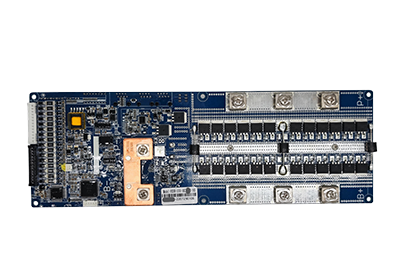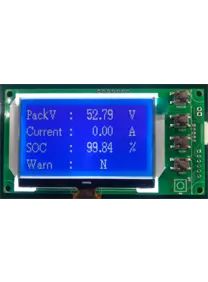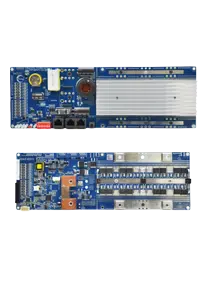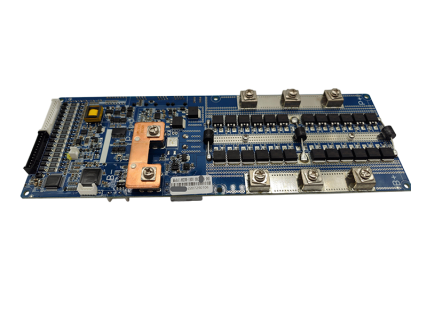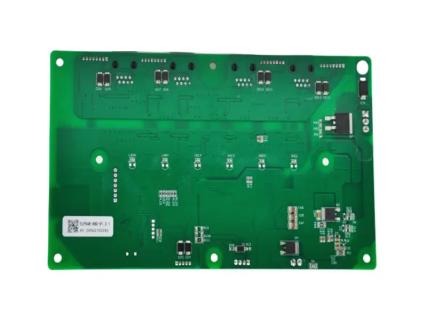
A battery management system (BMS) serves as an essential electronic framework that oversees, regulates, and enhances the performance of battery packs, prioritizing safety, efficiency, and durability. This system plays a pivotal role in modern applications, including electric vehicles, renewable energy storage solutions, and consumer electronics. By maintaining optimal operating conditions, the BMS safeguards the battery from potential damage, mitigates risks, and ensures reliable functionality across diverse environments.
A battery management system is a sophisticated control mechanism designed to monitor and manage critical battery pack parameters, such as cell voltage, state of charge, temperature, and charging cycles. By ensuring that the battery operates within safe limits, the BMS, including BMS for 12v battery, HV BMS, and so on, prevents issues like overcharging, over-discharging, or short circuits, which could otherwise cause permanent damage or hazardous situations.
The primary goals of a BMS encompass continuous monitoring, safety assurance, cell balancing, thermal regulation, and lifespan extension. The system diligently tracks parameters like cell voltage, battery temperature, capacity, and current flow to assess the state of charge and optimize performance. It identifies and mitigates unsafe conditions, preventing risks such as overcharging, over-discharging, or thermal runaway. Through cell balancing, the BMS maintains uniform voltage across all cells, avoiding overvoltage or undercharging issues. Additionally, it employs thermal management techniques, such as liquid or air cooling, to regulate battery temperature and prevent overheating. By optimizing charging currents and cycles, the BMS enhances battery efficiency and longevity.
A BMS comprises several integral components that work together to ensure optimal battery performance. The cell monitoring unit measures the open-circuit and individual cell voltages, providing essential data for balancing and safety. The control unit processes this data to maintain operations within safe parameters. A thermal management system, utilizing air or liquid cooling, regulates battery temperature to prevent overheating. The external communication interface enables interaction with other systems, such as chargers or vehicle control units. The cell balancing module equalizes voltage across cells to prevent inefficiencies, while the data collection system gathers secondary metrics like charge/discharge rates and total voltage for analysis. Finally, the safety module protects against short circuits, overcharging, and over-discharging, ensuring reliable operation under demanding conditions.
Battery management systems are categorized into two main types based on their architecture: centralized and modular. A centralized BMS, such as smart bms 48v, employs a single control unit to manage the entire battery pack, simplifying data collection and control but potentially facing scalability limitations for larger systems. In contrast, a modular BMS uses smaller units to oversee groups of battery cells, offering greater scalability and suitability for large-scale applications, such as electric vehicles.
To achieve optimal battery performance and safety, several best practices are recommended. Designing the BMS to prevent overcharging and over-discharging of lithium-ion batteries is critical, as overcharging can trigger thermal runaway and over-discharging can cause irreversible damage. Effective thermal management, through air or liquid cooling, helps regulate battery temperature under high loads, minimizing heat-related wear and extending lifespan. Activating the cell balancing function ensures voltage uniformity across cells, enhancing efficiency. Incorporating robust safety mechanisms allows the BMS to detect and address unsafe conditions, shutting down the system if necessary. Optimizing charging protocols regulates current and cycles to improve battery life, while continuous monitoring and analysis of parameters like state of charge, voltage, and temperature enable early detection of potential issues.
Battery management systems are integral to a wide array of applications. In electric vehicles, HV BMS monitors lithium-ion cells, manages energy, and ensures operational safety. For renewable energy storage, BMS ensures efficient power storage and distribution, maintaining safe and optimal operation. Consumer electronics, such as smartphones and laptops, rely on BMS to enhance battery performance and protect against overcharging or overheating. In industrial settings, BMS supports battery packages powering critical systems, ensuring consistent performance under challenging conditions.
Developing an effective BMS involves overcoming several challenges. Effective thermal management is essential to prevent thermal runaway and maintain performance in lithium-ion batteries. Scalability poses another hurdle, as designing systems for large battery packs with numerous cells requires modular architectures to ensure reliability. Accurate monitoring of cell voltage, temperature, and state of charge is critical to identify discrepancies. Additionally, establishing reliable communication between the BMS and external modules, such as chargers, can be complex in sophisticated systems.
As technology advances, battery management systems are evolving to incorporate features like fast charging, passive balancing, and advanced data analytics. Innovations in liquid cooling, control circuitry, and safety mechanisms are enhancing the performance of lithium-ion batteries across applications like electric vehicles and renewable energy storage. Future BMS designs are expected to focus on improving efficiency, reducing power losses, and developing advanced algorithms for state of charge estimation. Enhanced scalability and integration with emerging technologies, such as IoT and AI, will further elevate BMS capabilities.
A battery management system is a cornerstone of modern battery pack functionality, ensuring safety, performance, and longevity by monitoring critical parameters like cell voltage, temperature, and state of charge. By protecting against overcharging, over-discharging, and other risks, the BMS supports applications across industries, from electric vehicles to consumer electronics and renewable energy storage. As technological advancements continue, the BMS will play an increasingly vital role in optimizing battery performance, driving innovation, and enabling safer, more efficient energy storage solutions.