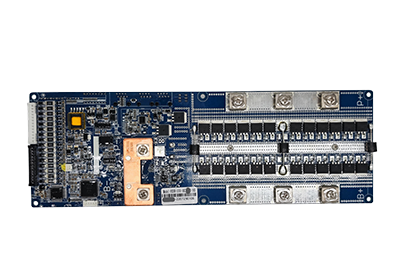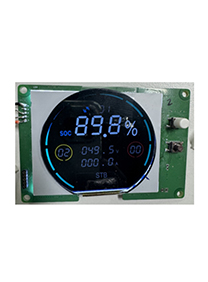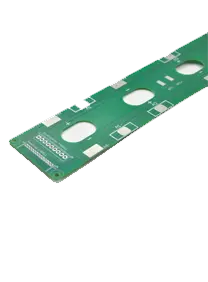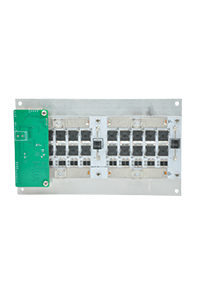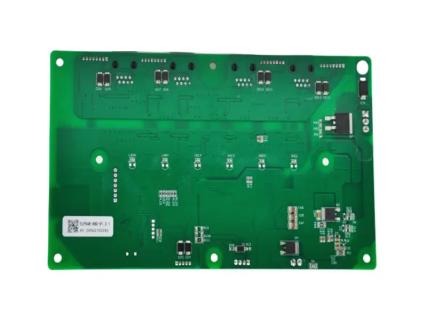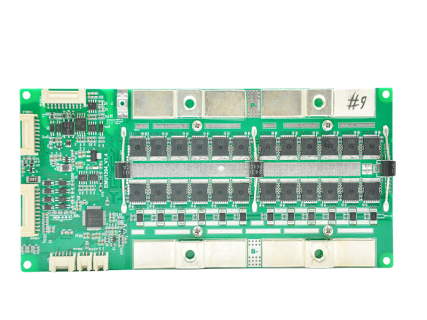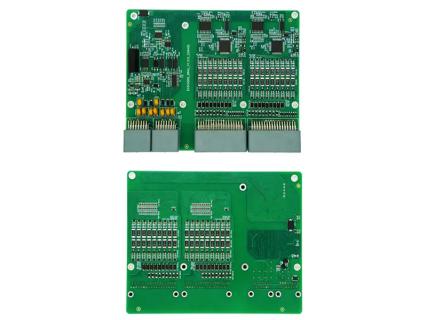
A smart BMS 48V is generally the better choice for modern energy storage systems because it provides advanced monitoring, communication, remote diagnostics, and intelligent battery management. However, a standard 48V BMS can still be suitable for simple battery applications where basic protection functions are sufficient.
For ESS (Energy Storage System) projects, the right choice depends on system complexity, monitoring requirements, safety expectations, and long-term operation goals. A reliable ESS BMS should not only protect the battery but also improve system efficiency, maintenance capability, and operational visibility.
The main difference between a smart BMS 48V and a standard BMS is the level of intelligence and system interaction.
A standard BMS mainly focuses on battery protection functions, including:
Overcharge protection
Over-discharge protection
Overcurrent protection
Short-circuit protection
Temperature protection
Cell balancing
A smart BMS 48V includes these basic protections while adding advanced features such as:
Real-time battery monitoring
CAN/RS485 communication
SOC (State of Charge) calculation
SOH (State of Health) estimation
Fault recording
Remote monitoring
Data transmission to energy management systems
For residential, commercial, and industrial ESS applications, these additional functions often provide significant advantages during long-term operation.
Energy storage systems operate differently from simple battery-powered devices. ESS applications often require continuous operation, accurate battery information, and integration with other power equipment.
A smart BMS 48V helps ESS operators by providing:
The BMS continuously collects data including:
Individual cell voltage
Pack current
Battery temperature
Remaining capacity
Charging and discharging status
This information allows operators to understand battery performance and detect abnormal conditions early.
Modern ESS solutions usually include:
Battery packs
Inverters
Chargers
Energy management systems
Monitoring platforms
A smart BMS communicates with these systems through protocols such as CAN or RS485, improving coordination between different components.
Traditional battery systems often require manual inspection. With intelligent monitoring, a smart BMS can identify:
Weak cells
Temperature issues
Abnormal charging behavior
Capacity degradation
This reduces troubleshooting time and helps prevent unexpected system downtime.
A standard 48V BMS can be suitable for smaller or less complex battery systems where advanced communication is not required.
Typical applications include:
Small backup power systems
Low-capacity battery packs
Basic solar storage systems
Equipment with independent battery operation
A standard BMS is often selected when:
The battery system does not require remote monitoring
The application has simple operating conditions
Cost optimization is a priority
However, for commercial and industrial ESS projects, a basic BMS may limit system visibility and future expansion capabilities.
A professional ESS BMS should provide more than basic protection. Important functions include:
Battery capacity information is essential for energy storage management.
SOC helps determine:
Remaining available energy
Charging requirements
Discharge planning
SOH helps evaluate:
Battery aging
Performance degradation
Replacement planning
A reliable ESS BMS should protect against:
Cell overvoltage
Cell undervoltage
High charging current
High discharge current
Excessive temperature
Low-temperature charging conditions
Industrial ESS projects commonly require:
CAN communication
RS485 communication
Modbus integration
Cloud monitoring compatibility
Communication capability is one of the key differences between a standard BMS and an intelligent battery management solution.
Yes. A LiFePO4 BMS 48V is specifically designed for lithium iron phosphate battery chemistry.
LiFePO4 batteries are widely used in ESS applications because they offer:
High thermal stability
Long cycle life
Good safety performance
High reliability
However, LiFePO4 cells require precise voltage management.
A LiFePO4 BMS 48V must be configured according to:
Cell series configuration
Charging voltage limits
Discharge protection thresholds
Balancing requirements
Temperature conditions
Using an unsuitable BMS can reduce battery performance and may cause charging or protection issues.
For solar energy storage systems, a smart BMS 48V is usually the preferred solution.
Solar ESS systems often require:
Battery status monitoring
Communication with inverters
Remote operation management
Long-term performance tracking
A smart BMS allows the energy storage system to optimize charging and discharging based on battery conditions.
For small standalone solar batteries, a standard BMS may be acceptable. For commercial and industrial solar storage projects, intelligent management is becoming increasingly important.
Yes, a smart BMS can help extend battery life by improving battery control and preventing harmful operating conditions.
Key mechanisms include:
Cell imbalance reduces usable battery capacity. Intelligent balancing helps maintain consistent cell performance.
A smart BMS prevents:
Excessive charging
Deep discharge
Thermal stress
Abnormal current conditions
Historical battery data helps identify aging trends and optimize maintenance schedules.
For large ESS installations, these advantages can significantly reduce lifecycle costs.
The choice depends on your application requirements.
Choose a standard 48V BMS when:
The system is simple
Monitoring is unnecessary
Communication is not required
The battery operates independently
Choose a smart BMS 48V when:
The battery is part of an ESS system
Remote monitoring is needed
Multiple devices require communication
Long-term reliability is critical
Battery performance data is valuable
For OEM battery manufacturers and ESS developers, smart BMS solutions usually provide better scalability and future compatibility.
The choice between a smart BMS 48V and a standard BMS depends on the complexity and goals of the energy storage project. Standard BMS products provide essential battery protection, while smart BMS solutions deliver advanced monitoring, communication, and intelligent control.
For modern ESS applications, a smart ESS BMS combined with a properly configured LiFePO4 BMS 48V offers better system management, improved safety, and stronger long-term value.
As energy storage systems become more intelligent and interconnected, selecting the right 48V BMS is a key factor in achieving reliable battery performance and reducing operational costs.
A smart BMS 48V is an intelligent battery management system with monitoring, communication, and advanced control functions.
For ESS applications, a smart BMS is usually better because it provides more control, monitoring, and maintenance capabilities.
An ESS BMS protects battery packs, manages charging and discharging, and communicates battery data to other systems.
Yes. LiFePO4 BMS 48V solutions are widely used in solar and renewable energy storage systems.
Yes. Lithium battery packs require a BMS to ensure safe charging, discharging, and operation.
Yes, but the additional cost provides better monitoring, reliability, and long-term system management.