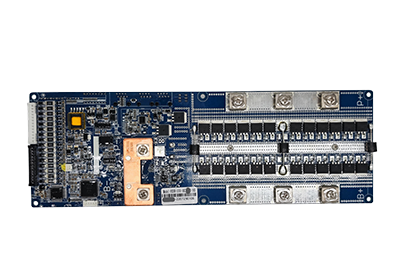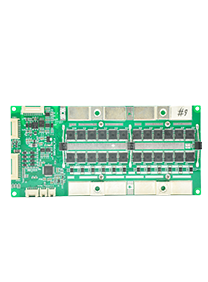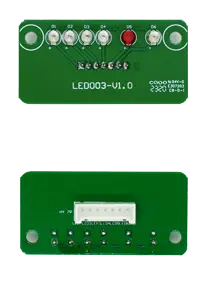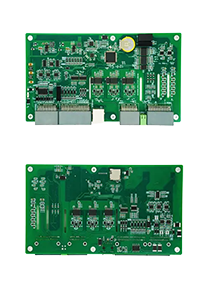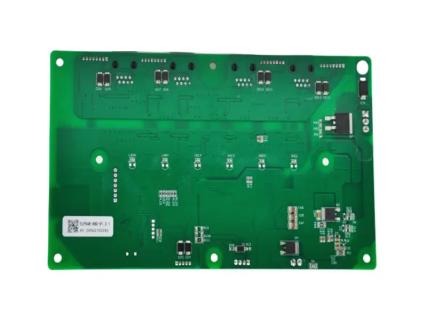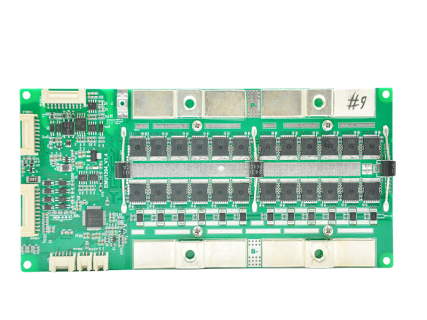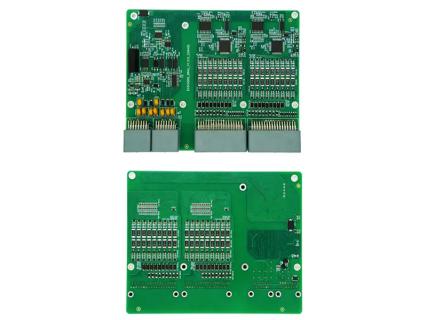
LiFePO4 battery packs need an active equalizer when cell voltage differences become large enough to reduce usable capacity, affect charging efficiency, or trigger BMS protection. In high-capacity battery packs, long-series configurations, fast charging applications, and energy storage systems, active balancing is often required to maintain consistent cell performance and extend battery lifespan.
While a standard BMS can provide basic passive balancing, an active equalizer transfers energy from higher-voltage cells to lower-voltage cells, improving pack balance with higher efficiency and shorter battery equalization time. For industrial, ESS, and high-performance LiFePO4 applications, active balancing is becoming an important technology for maintaining battery reliability.
Battery equalization is the process of correcting voltage differences between individual battery cells connected in series.
A LiFePO4 battery pack consists of multiple cells working together. Ideally, each cell should maintain the same voltage level during charging and discharging. However, due to differences in:
Cell manufacturing characteristics
Internal resistance
Temperature conditions
Aging rates
Charging cycles
cells gradually become unbalanced.
When imbalance occurs, some cells may reach their maximum voltage earlier during charging while others remain undercharged. This reduces the effective capacity of the entire battery pack.
The purpose of battery equalization is to restore cell consistency and ensure that every cell operates within a safe voltage range.
The battery equalization meaning refers to the process of balancing the state of charge (SOC) and voltage differences between individual cells in a battery pack.
For LiFePO4 batteries, effective equalization helps:
Increase usable battery capacity
Improve charging efficiency
Reduce cell stress
Prevent premature battery degradation
Improve overall pack reliability
Battery equalization is especially important in large battery systems where a small voltage difference between cells can significantly affect total energy output.
A LiFePO4 battery pack may require an active equalizer in the following situations:
When cell voltage differences exceed normal operating limits, balancing becomes necessary.
Common signs include:
One cell reaches full voltage earlier than others
BMS frequently activates overvoltage protection
Battery capacity is lower than expected
Charging stops before the pack reaches full capacity
An active equalizer can redistribute energy between cells and reduce these voltage differences.
Large LiFePO4 battery systems usually contain many cells connected in series.
Examples include:
48V battery packs
Solar energy storage systems
Industrial ESS batteries
Electric vehicles
Telecom backup batteries
As the number of series cells increases, the possibility of imbalance also increases. Passive balancing becomes less effective because it only dissipates excess energy as heat.
An active equalizer provides a more efficient solution by moving energy between cells instead of wasting it.
Applications with frequent high-power operation require better cell consistency.
Examples:
Industrial equipment
AGVs and robots
Electric mobility systems
Fast-charging battery packs
Large current fluctuations can increase differences between cells. Active equalization helps maintain stable operation under demanding conditions.
As LiFePO4 batteries age, individual cells may degrade at different rates.
Aging can cause:
Different internal resistance values
Uneven charging speed
Reduced available capacity
An active equalizer helps compensate for these differences and improves the performance of aging battery packs.
An active equalizer balances cells by transferring energy from higher-voltage cells to lower-voltage cells.
Unlike passive balancing, which removes extra energy through resistors, active balancing uses energy conversion circuits.
The process typically involves:
Detecting cell voltage differences
Identifying high-voltage and low-voltage cells
Transferring energy between cells
Reducing voltage imbalance
Maintaining better SOC consistency
Advantages of active equalization include:
Higher balancing efficiency
Faster balancing speed
Lower energy loss
Better performance for large battery packs
The battery equalization time depends on several factors:
Initial voltage difference between cells
Battery capacity
Equalizer current
Number of cells
Battery condition
For small battery packs with minor imbalance, equalization may take several hours.
For large-capacity LiFePO4 battery systems with significant imbalance, the process may require longer periods.
An active equalizer generally reduces balancing time compared with passive balancing because it can transfer energy at a higher efficiency.
Passive balancing works by releasing excess energy from high-voltage cells through resistors.
Advantages:
Simple design
Lower cost
Suitable for small battery packs
Limitations:
Slow balancing speed
Energy loss as heat
Limited balancing current
Active balancing transfers energy between cells.
Advantages:
Higher efficiency
Faster balancing
Suitable for large battery systems
Better for high-capacity LiFePO4 packs
Limitations:
More complex circuit design
Higher initial cost
For industrial and ESS applications, active equalization is often preferred because battery performance and reliability are more important than minimizing initial cost.
No. An active equalizer and a battery management system (BMS) perform different functions.
A BMS provides:
Overcharge protection
Over-discharge protection
Temperature monitoring
Current protection
Battery status monitoring
An active equalizer focuses on:
Cell voltage balancing
SOC consistency improvement
Reducing voltage differences
In advanced LiFePO4 battery systems, the best solution is usually a combination of a reliable BMS and an active equalizer.
Battery engineers usually evaluate the need for active equalization by checking:
Large voltage gaps between cells indicate imbalance.
If charging frequently stops early, some cells may be reaching voltage limits too quickly.
Reduced capacity compared with the rated value can indicate cell inconsistency.
Frequent voltage-related alarms often suggest balancing issues.
Regular monitoring helps determine whether an active equalizer is necessary.
Active equalizers are commonly used in:
LiFePO4 energy storage systems
Solar battery systems
Industrial battery packs
Electric vehicles
Marine battery systems
Telecom backup power
High-capacity 48V battery packs
These applications require stable operation, long cycle life, and maximum available capacity.
LiFePO4 battery packs need an active equalizer when cell imbalance affects charging performance, usable capacity, or system reliability. For large-capacity battery systems, long-series configurations, and industrial energy storage applications, active battery equalization provides a more efficient way to maintain cell consistency.
Understanding battery equalization meaning and monitoring battery equalization time helps battery manufacturers and system integrators choose the right balancing solution. Combining an active equalizer with a high-quality BMS can significantly improve LiFePO4 battery performance, safety, and service life.
An active equalizer is a device that transfers energy between battery cells to reduce voltage differences.
Equalization keeps cells balanced and improves battery capacity, safety, and lifespan.
It depends on battery condition, usage frequency, and cell imbalance level.
For large LiFePO4 battery packs, active balancing is usually more efficient and faster.
Battery equalization time depends on imbalance level, battery capacity, and equalizer current.
Yes. An active equalizer works together with a BMS to improve battery management performance.